
Stablecoin news turns alarming when a dollar-pegged coin dips below its peg, yet most headlines trace back to reserves and regulation. Reserves show what backs a coin. The law decides who must disclose them and how often.
Wider market coverage sits in the crypto news today roundup. This explainer stays on the stablecoin side, with the depeg history laid out by date and cause.
What the headlines get wrong
Several misreadings shape how stablecoin stories are received. The table sets each common assumption against the record, so you can judge a new headline against known events rather than against its tone.
| Common assumption | What the record shows | Planning use |
|---|---|---|
| A stablecoin always trades at its peg | USDC dropped to a low of $0.877 per coin on March 11, 2023, and several other dollar coins slipped below parity at the same time. | Treat the peg as a promise that depends on reserves and redemption both working. |
| Reserves are safe if they are held as cash | Circle announced that $3.3 billion of the cash backing USDC was held at Silicon Valley Bank. | Ask where the cash is held, not only what form it takes. |
| US law now lets stablecoins pay interest | The GENIUS Act prohibits issuers from paying direct interest or yields, though affiliates or partners may offer yield-like incentives. | Check who is paying any reward and whether the issuer itself is bound by the ban. |
The market figures come from Bitcoin.com News coverage of the USDC depeg, and the yield point from Stablecoin Insider’s analysis of yield restrictions.
Depeg history by date and cause
The March 2023 USDC episode is the clearest recent case of how a peg breaks. The coin’s backing and its route back to dollars both ran through banks, so trouble at one bank became trouble for the coin.
- Reserve exposure. Circle, the issuer of USDC, announced that $3.3 billion of the cash backing USDC was held at Silicon Valley Bank. That tied the coin’s price to news about the bank.
- The low. USDC fell to $0.877 per coin on Saturday, March 11, 2023. That is a deep discount for an asset sold as a dollar equivalent.
- Redemption friction. Exchange conversions were paused over the weekend while banks were closed. Conversions rely on USD transfers from banks that clear during normal banking hours, so holders could not simply swap back to dollars.
- Contagion. Other coins slipped as well, including FRAX, USDD, USDP, DAI and GUSD while the episode unfolded.
The practical reading is that a below-par price on a weekend can persist because the route back to dollars is closed. It does not necessarily mean holders have permanently lost confidence. That is a reason to look at the redemption mechanism and the banking calendar before reacting to a single price screenshot.

Reserves and attestations
A reserve attestation is the issuer’s published account of what stands behind its coin. It is the document to read after any depeg headline, because it shows whether the backing matches the promise.
The GENIUS Act sets the US standard. According to a summary of the law’s compliance timetable, reserves must consist of US dollars or short-term Treasury securities, with one-to-one backing. Issuers must also publish monthly disclosures about their reserve composition.
Those rules answer different questions. The composition rule limits what an issuer can hold, which narrows the room for risky assets. The monthly disclosure rule lets outsiders check the holdings at a regular interval instead of waiting for a crisis. When you read a disclosure, look for the form of the assets and also the institutions holding them.

US stablecoin law: the GENIUS Act timeline
The GENIUS Act is the US federal framework for payment stablecoins, and its dates matter more than its headline. Signing the law did not switch every obligation on at once.
- June 17, 2025. The Senate passed the bill 68-30.
- July 17, 2025. The House followed with a 308-122 vote.
- July 18, 2025. President Trump signed the GENIUS Act into law.
- July 18, 2026. Regulators have until this date to finalize implementing rules.
- January 18, 2027. The core statutory requirements take effect on this date, or 120 days after final rules, whichever is later.
- July 18, 2028. This is the federal compliance deadline for stablecoin service providers. After that date, service providers cannot offer stablecoins to US users.
These dates come from KuCoin News reporting on the compliance deadline. The practical point is that the law is enacted but several obligations are not yet binding. News about “new rules” in the interim is usually about rulemaking, not about enforcement of the final regime.
Two further items show where the law is still moving. The FDIC approved procedures in December 2025 for bank stablecoin subsidiaries. Separately, the Senate scheduled a markup of the CLARITY Act for January 15, 2026, a related bill that the same report links to the yield debate. The yield loophole is the live argument: the direct-yield ban is in force, but affiliates and partners may still offer yield-like incentives.
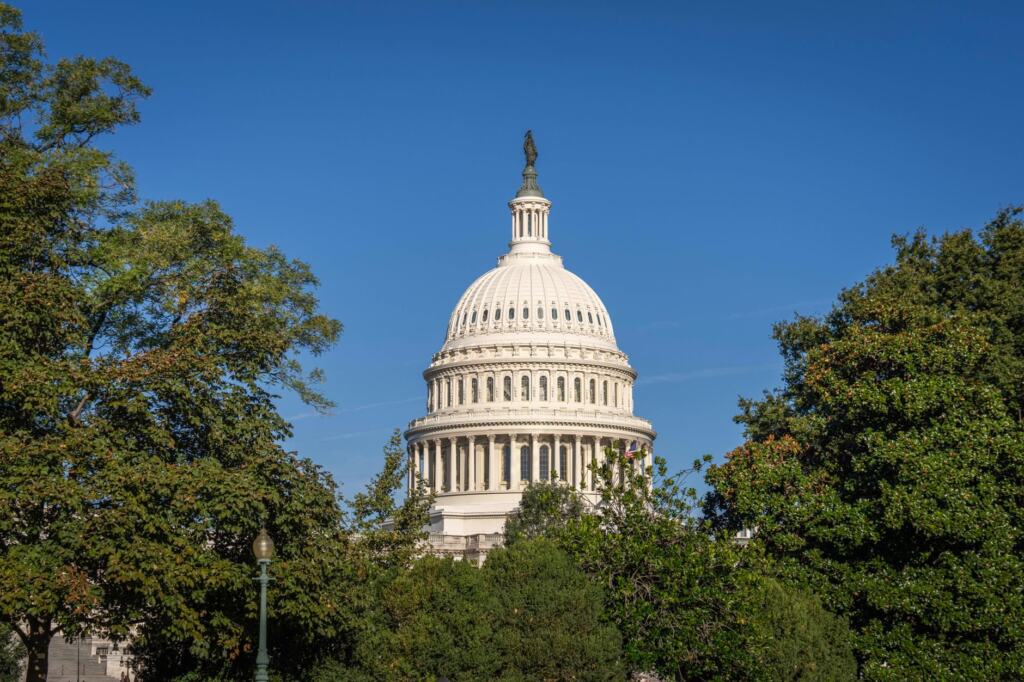
The GENIUS Act is a US law, so it governs issuers and service providers dealing with US users. A coin issued under another jurisdiction’s regime follows that regime’s reserve and disclosure rules instead.
Who actually uses stablecoins
Business adoption is thinner than the headlines suggest. In a September 2025 Cleveland Fed survey, only one of the 148 respondents said it was currently using stablecoins. The same coverage reports that stablecoins are primarily used for back-end settlement between banks, with cross-border payments cited as the best use case.
That gap is useful context for any adoption story. The coins most people see in wallet apps, such as USDC and USDT, mainly serve holders and traders. Business payment use is still a small share of the conversation, so be sceptical of claims that stablecoins have already replaced card or bank rails.

Reading the next headline
A few habits separate useful stablecoin news from noise. Each one maps to a point established above.
- Separate price from redemption. A dip with paused conversions points to a closed banking route. A dip with disclosed reserve problems points to the backing itself.
- Match the story to the legal date. If a headline says a rule “takes effect”, compare it with the timeline above before assuming it already binds issuers.
- Keep neighbouring topics apart. Token-specific legal stories live elsewhere. The ripple news latest page covers XRP. Central bank digital money is a public-sector alternative to private stablecoins, and cbdc news tracks it.
Frequently asked questions
| Question | Answer |
|---|---|
| How do stablecoin laws differ in the US and EU? | The GENIUS Act is US federal law and applies to issuers and service providers dealing with US users, on the timeline described above. The EU applies its own separate rulebook, so compare an issuer’s disclosures under the regime that actually governs it. |
| Did Tether lose its peg when USDC did? | Not on the reported figures. Tether (USDT) remained within a $0.99 to $1 range after the Silicon Valley Bank problems began. |
| What backs a stablecoin such as PYUSD? | PYUSD is fully backed by US dollar deposits, short-term Treasuries and similar cash equivalents, and is redeemable 1:1. |