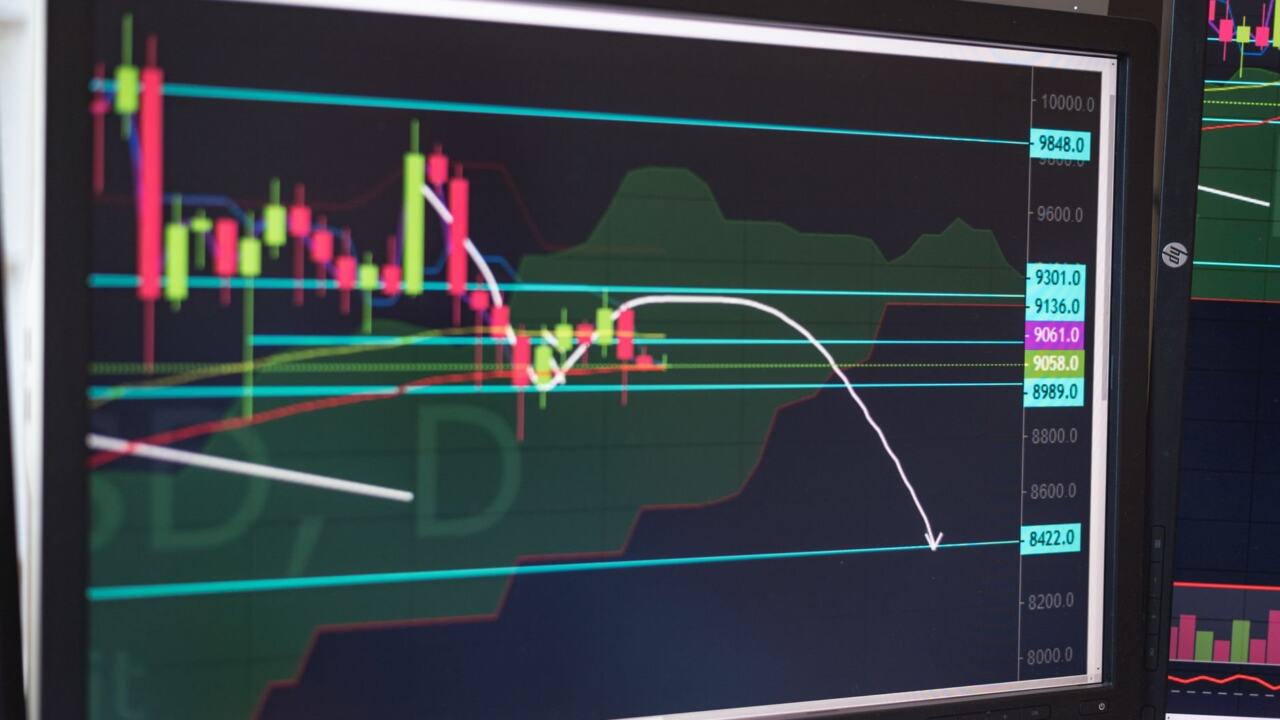
Knowing how to buy cryptocurrency starts with one decision: how you will pay. Most US buyers use a bank account (ACH) or debit card on a regulated exchange. Spend only an amount you can afford to lose.
The sections below follow the order a first-time buyer meets each choice: payment, platform, coin, the order itself, then the trading concepts worth learning before you do more than buy and hold. Once you own coins and want to follow their price, how to read crypto charts is the natural next step.
Choosing how to pay
Payment method comes first because it sets your cost and narrows your platform options. Bitbo’s US buying guide notes that most people in the USA buy Bitcoin with a bank account or debit card on a regulated exchange. The other routes it describes cost noticeably more.
- Bank account or debit card. This is the sensible default for a first purchase, because it is the route most US buyers use on regulated exchanges. Whichever you pick, read the fee line on the confirmation screen before you approve the order.
- Credit card. The same guide puts the minimum fee at about 3%, because most credit card processors charge 3%. That cost is paid before the price has moved at all, so this route suits only a buyer with a specific reason to use it.
- Bitcoin ATM. Bitbo reports that these machines often charge 5-10% per purchase. That is a steep price for convenience, and an exchange account is the better default unless cash is your only option.
The choice that matters most is the one that keeps the fee visible. If a route hides its charge inside the quoted price, compare the total you pay with another platform before going ahead. The fee overview near the end of this guide puts the supplied figures side by side.
Where to buy cryptocurrency
For most beginners, the answer to where to buy cryptocurrency is a regulated exchange that supports your preferred payment method and shows its fees clearly. Four criteria separate a good fit from a poor one.
- Regulated status. Bitbo’s guide frames the common US route as a regulated exchange. A platform that cannot tell you plainly how it is regulated is not a sensible first stop.
- Fee schedule. Look for separate maker and taker rates, any charge for recurring buys, and the extra charge for paying by card. Exchange fee schedules differ enough that a few minutes of comparison matters.
- Recurring buys. If you plan to buy gradually, check whether the platform supports scheduled purchases and what they cost.
- How coins are held. Fidelity states that crypto is not insured by the FDIC or SIPC and is not an obligation of any bank. A balance on a platform therefore does not carry the protection of a bank deposit.
Bitbo’s guide covers Coinbase, Gemini, Kraken and River, and these are the platforms whose fee figures appear later in this guide. They differ mainly in how they charge: Kraken’s published rates apply to trades, while the others are compared on recurring purchases.
Platforms also divide into custodial exchanges and wallet-based decentralized ones. The centralized vs decentralized exchange comparison explains the trade-offs. For a first purchase, a regulated custodial exchange is the simpler start, because a decentralized exchange asks you to manage a wallet from day one.
Choosing which coin to buy
Choose a coin by size, by how well you understand it and by whether your platform lists it with clear pricing. A familiar market list helps you compare these at a glance.
Schwab reports that the total market capitalization of all cryptocurrencies combined passed $4 trillion for the first time in July 2025, citing CoinGecko data. That figure describes the whole market, and it says nothing about the safety of any single coin. To see how an individual coin’s figure is built, read what is market cap in crypto.
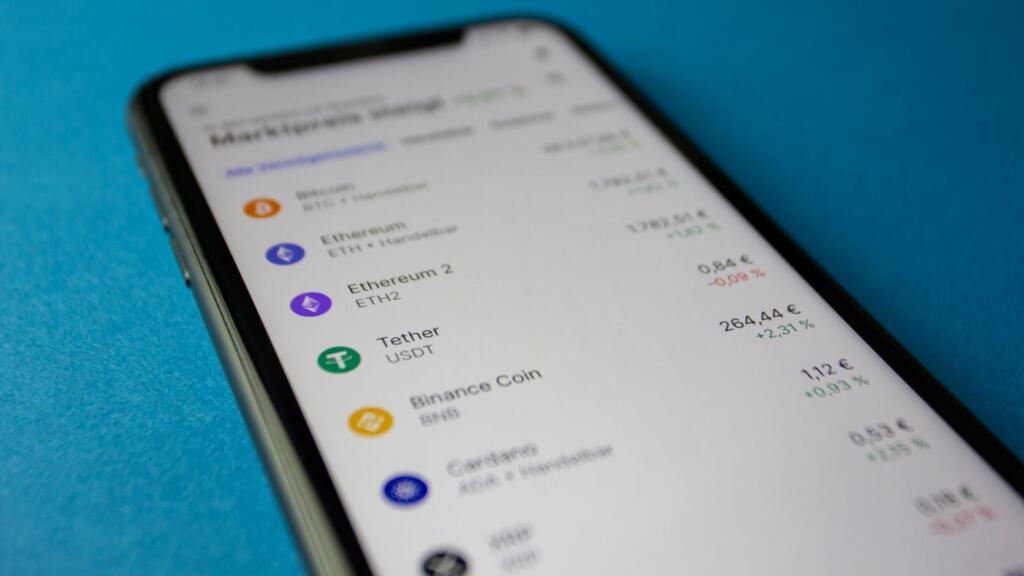
Schwab also warns that crypto prices routinely swing sharply, potentially wiping out gains in a matter of hours. A large market cap does not remove that behaviour. Treat the list as a way to narrow your choice, then size the purchase to what you can lose.
Placing your first buy order
A first purchase takes a handful of steps, and the order type is the one setting that changes your price. Work through them in sequence.
- Open and secure the account. Register on your chosen exchange and complete whatever identity checks it requires. Turn on every available security option before adding money.
- Fund the account. Use the payment route you chose earlier. Check the fee shown for that route, since the funding method can add a charge.
- Select the asset. Search for the coin and confirm the full name and ticker, because lookalike names exist.
- Choose the order type. A market order buys immediately at the best available prices. A limit order sets the price you are willing to pay and waits until the market reaches it. A beginner who wants certainty of purchase usually picks the market order, while one who cares more about price picks the limit order.
- Review the total. The confirmation screen should show the amount, the fee and the estimated coins received. Stop if any of those is missing.
- Confirm, then decide where the coins will sit. Leaving them on the exchange is the simplest option. Moving them elsewhere is a separate decision covered under safety below.
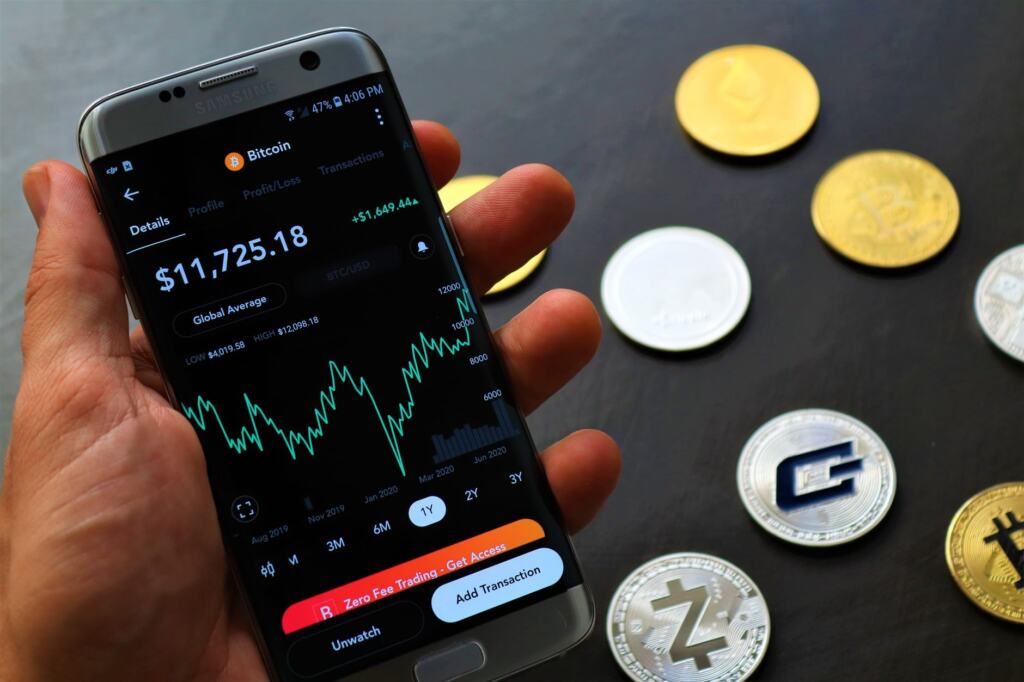
The platform sets the minimum purchase, and it appears on the order screen. Whatever that minimum is, your own limit should be set by the loss you can absorb, not by what the app allows.
Spot trading and futures trading
Spot trading means buying the coin itself at the current price, while futures trading means trading a contract whose value follows the coin’s price. The difference matters most for risk.
With a spot purchase you own the asset. If its price falls, you hold something worth less, but you are not forced out of the position. A futures contract settles on price movement, and many futures products are traded with borrowed money. Leverage multiplies gains and losses alike, so a modest price move can produce a large loss against your deposit. The crypto futures trading guide covers how those contracts work, and crypto margin trading covers borrowing against your holdings.
Schwab is blunt about the category: trading cryptocurrencies comes with significant risks, and only traders who understand the market should take them on. For a first-time buyer, that points to a clear rule. Start with spot purchases, and treat leveraged products as a later step you take only once you can explain exactly how a position is closed and what it costs to hold.
Reading charts, indicators and the order book
Charts, indicators and the order book are three different views of the same market, and a beginner needs only a working idea of each. Schwab notes that short-term crypto traders typically apply technical analysis to price and/or volume charts. A buy-and-hold purchaser can skip most of this for now.
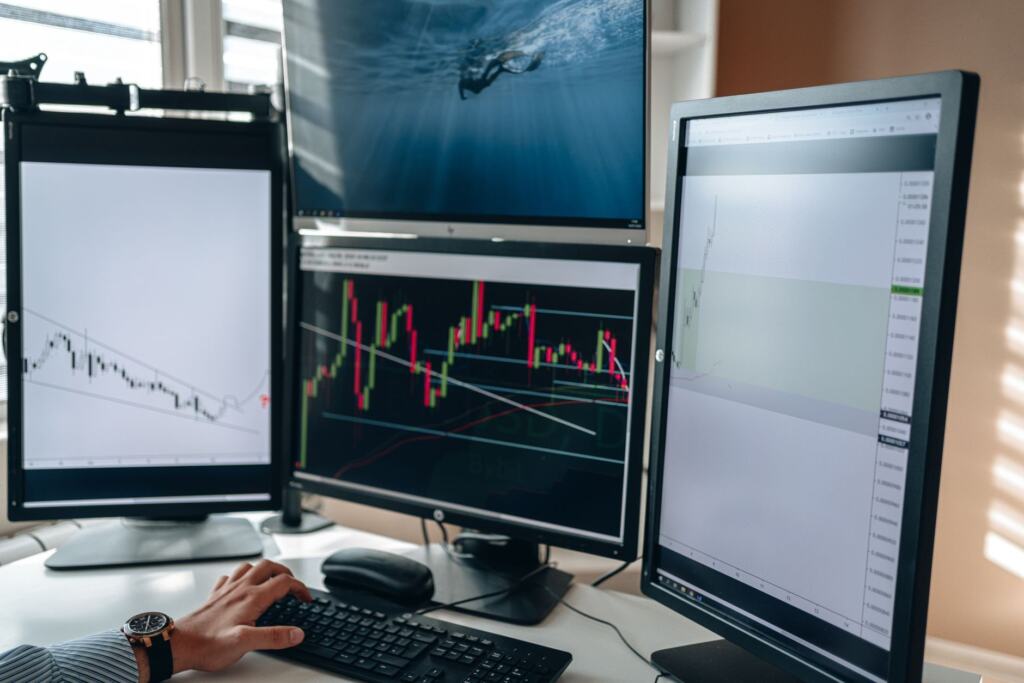
Candlestick chart
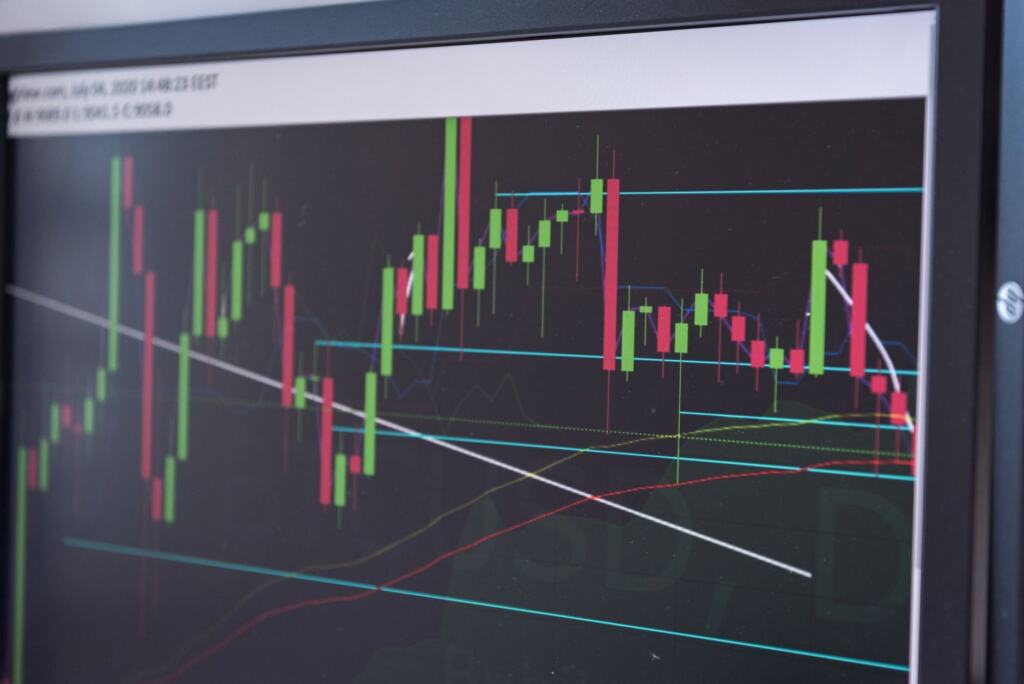
A candlestick chart draws one candle for each time period, showing where price opened, where it closed and how far it travelled in between. The body shows open and close, and the thin lines, called wicks, show the highest and lowest prices reached. Colour usually shows whether the period closed higher or lower than it opened.
The practical skill is to compare candles with each other. A run of long candles in one direction shows a strong move, and long wicks show that price was pushed away from a level. Horizontal lines drawn at repeated turning points are the simplest way to mark where buyers or sellers have been active. Named shapes built from several candles are covered in crypto chart patterns.
Relative strength index
The relative strength index, or RSI, is a momentum indicator drawn beneath the price chart. It condenses recent price gains and losses into a single line on a bounded scale, so you can see whether recent moves have been mostly upward or mostly downward.
Schwab says traders rely on quick decision-making based on charts, technical indicators and trends. Indicators like RSI describe what prices have already done. They do not promise what comes next, so use one as a second opinion alongside the candles, never as a standalone trigger. A strong trend can keep an indicator at an extreme for a long time, which is why acting on a single reading is the usual beginner mistake.
Order book
The order book is the live list of resting buy and sell orders, sorted by price. The highest buy price and the lowest sell price sit at the top, and the gap between them is the spread, which is a hidden cost of trading. A thick book with many orders close to the current price means you can trade larger amounts with little price movement. A thin book means your own order can move the price. The guide on what is trading volume in crypto explains how volume and liquidity relate to this.
The order book also explains the maker and taker labels on fee schedules. A limit order that rests in the book adds liquidity and is called a maker order. An order that fills against orders already waiting takes liquidity and is called a taker order. Exchanges often charge makers less, which is why patient limit orders can cost less than market orders on the same platform.
Sizing risk per trade
No supplied source gives a single percentage that fits every portfolio. The firm rule is the ceiling: Fidelity says you should only buy crypto with an amount you’re willing to lose, and Schwab says never invest more than you can afford to lose.
That ceiling applies to your total crypto exposure. Risk per trade then has to sit well inside it. A workable process has four parts.
- Set the budget first. Decide the total you could lose without changing your finances, and treat it as a hard limit.
- Fix a loss limit for each trade. Pick a small slice of that budget before you enter. The slice is a personal choice, and a smaller one keeps a losing streak survivable.
- Place the exit level where the idea fails. A stop-loss belongs at the price where your reason for the trade is no longer valid, not at a round number that feels comfortable.
- Size the position from the exit. Divide your loss limit by the distance between entry and exit. A wider stop means a smaller position, never the reverse.
Why be this strict? Fidelity gives a vivid example of how far prices can travel. A Bitcoin holding bought at about $7,000 in March 2020 would have risen to $69,000 in November 2021, a gain of over 850%. The same holding then fell to $17,500 by June 2022, a loss of over 70% from the peak. A position sized to survive the second half of that story is the point of the budget. The crypto risk management guide develops the process in more depth.
Trading styles and tools
Your style should match the time you can give and the risk you can bear, and for a newcomer the quieter styles come first.
Gradual buying
Schwab describes dollar-cost averaging as investing a set amount of money at regular intervals. It replaces the question of when to buy with a schedule, which suits people who do not want to time the market. The method is covered in dollar cost averaging crypto. Because each scheduled purchase carries a fee, the platform’s recurring-buy charge matters more here than anywhere else.
Short-term trading
Short-term trading means acting on charts, indicators and trends within a day or a few days. It demands attention and discipline, and it multiplies the number of fees you pay. A trader who opens and closes many positions pays the spread and fee each time. The full approach is set out in how to day trade crypto, while swing trading crypto covers holding positions for days to weeks instead. Newcomers who want a slower pace should start with the second.
Automation
Software that places orders from rules you set is covered in crypto trading bots. A bot executes your rules faster and more consistently than you can, but it cannot remove market risk and it cannot repair a weak plan. If you cannot describe your strategy in plain words, automating it only speeds up the mistakes.
Tracking trades and keeping coins safe
Record every trade and decide early where your coins will be held. Both habits protect you more than any chart skill does.
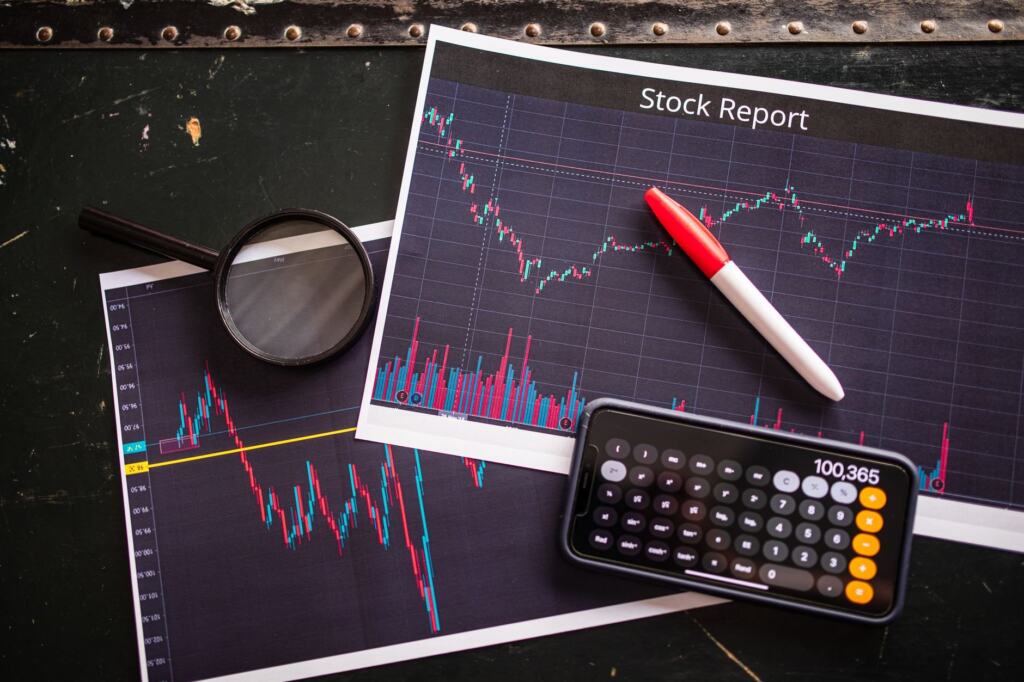
A trade record should list the date, the coin, the entry, the exit, the fees paid and your reason for acting. Fees belong in the record because they quietly reduce every result. A simple calculator and a written log are enough to start, and the crypto trading journal guide shows what to capture. Reviewing the log shows whether you follow your own rules, which is more useful than any single win.
On custody, leaving coins on an exchange is convenient but, as Fidelity notes, uninsured by the FDIC or SIPC. A personal wallet gives you control and also gives you responsibility for the access keys. Crypto wallet for beginners explains the options. Keep only what you need to trade on the platform, and move longer-term holdings once you understand the wallet you are moving to.
Scams deserve the same caution. Fake platforms, impersonators and guaranteed-return pitches all target new buyers. Read common crypto scams before you send money to anyone, and treat any promise of certain profit as a warning sign given how sharply prices move.
Fee overview
Fees decide how much of each purchase actually becomes crypto, so compare them before you commit to a platform. This table collects the figures from Bitbo’s US guide.
| Route | Fee figure | Planning use |
|---|---|---|
| Credit card purchase | Minimum about 3% | Treat as a floor, and avoid for routine buying |
| Bitcoin ATM | Typically 5-10% per purchase | Use only when no exchange route is available |
| Kraken taker fee | 0.25%, falling to 0.1% with sufficient trading volume | Applies when your order fills against the existing book |
| Kraken maker fee | Falling to 0% with sufficient trading volume | Rewards patient limit orders at higher volumes |
| Coinbase recurring buy | About 2.09% estimated on a $100 recurring buy | Highest of the recurring-buy estimates here |
| Gemini recurring buy | About 0.55% estimated on a $100 recurring buy | A middle option for scheduled purchases |
| River recurring buy | About 0.3% estimated; zero-fee recurring buys advertised | Worth checking first if you plan to buy gradually |
Figures are drawn from Bitbo’s guide to buying Bitcoin in the USA, which presents the recurring-buy numbers as estimates.
Read the table by purchase style. A one-off buyer should focus on the funding route, where the gap between a card and a bank or debit payment is widest. A scheduled buyer should compare the recurring-buy estimates, because the fee repeats on every purchase. An active trader should look at maker and taker rates, since Kraken’s own figures fall as trading volume rises. Fee schedules change, so confirm the current numbers on the exchange before you fund an account.
Frequently asked questions
Is cryptocurrency insured like a bank deposit?
No. According to Fidelity, crypto holdings have no FDIC or SIPC coverage, and no bank stands behind their value. That is one reason to limit purchases to an amount you can afford to lose.
What is the minimum amount to buy crypto?
Each platform sets its own minimum purchase and shows it on the order screen before you confirm. Your own limit should come from what you can afford to lose, since a platform minimum says nothing about your risk.
Do I need to read charts before my first purchase?
No. Schwab links chart analysis mainly to short-term traders, who apply technical analysis to price and volume charts. If you are buying and holding, a clear fee, a sensible amount and a safe place to keep the coins matter more than chart skills at the start.