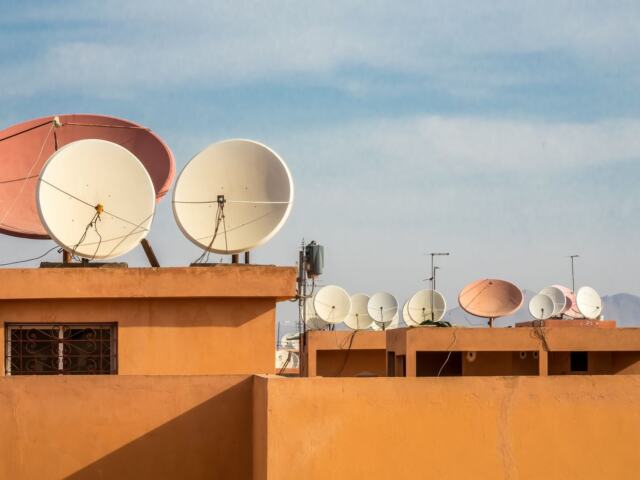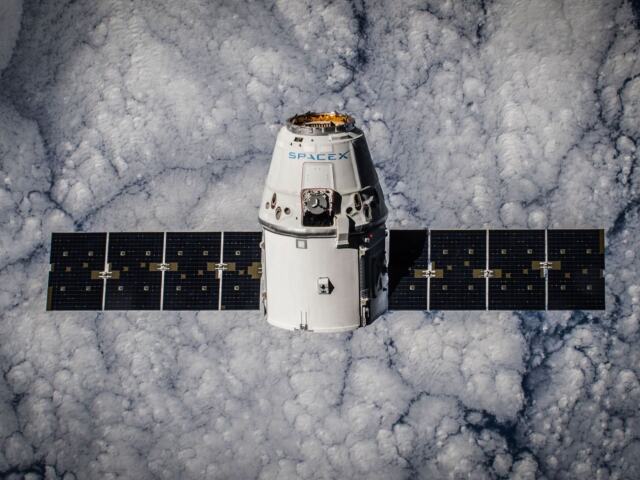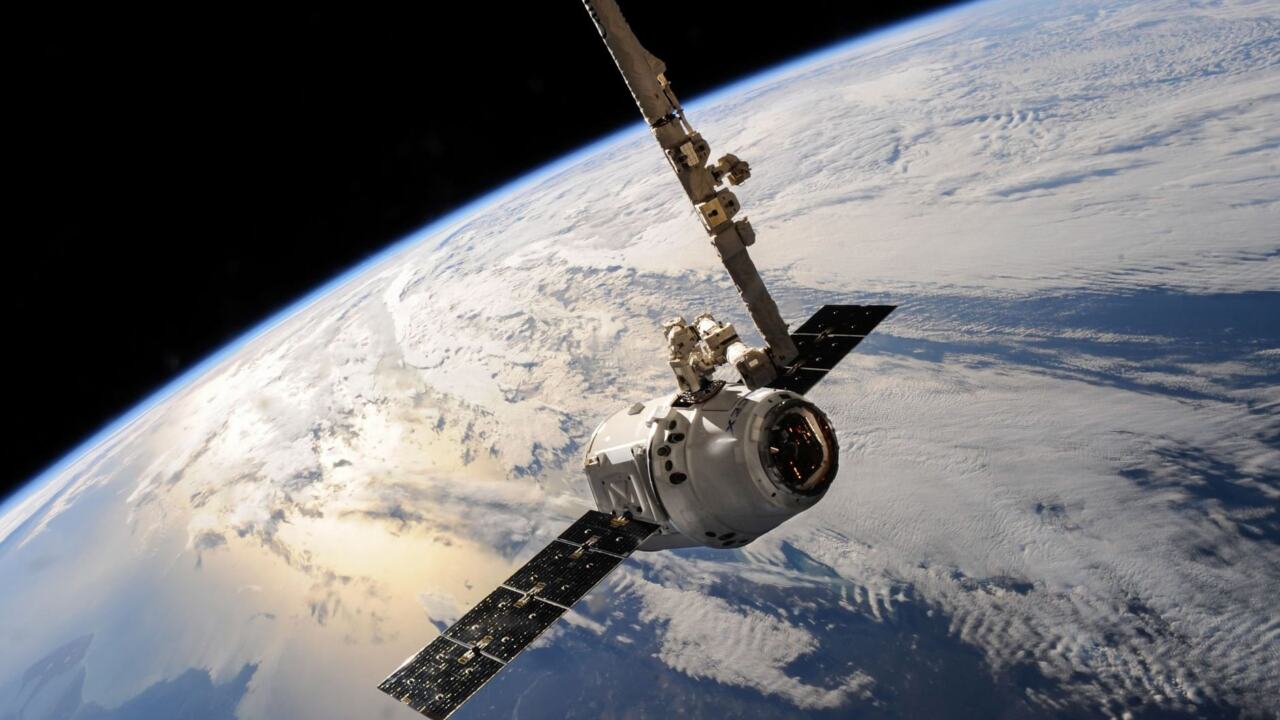
A holder wonders whether a satellite could keep a private key out of every thief’s reach. A space based crypto wallet of that kind is not what the best-documented orbital crypto project offers: Spacecoin’s satellites provide connectivity, not key custody.
The crypto satellite hub sets out the wider topic. This guide tests the wallet idea, separates what is documented from what is assumed, and shows where a hardware wallet does the same job more simply.
What orbital crypto projects have documented
The orbital crypto project with the most public detail is Spacecoin, and its documented work is about communications. According to HackerNoon’s account of Spacecoin, its first test satellite, CTC-0, launched on December 21. CTC-0 is an 8U nanosatellite built by the Bulgarian manufacturer EnduroSat, and its initial demonstration is text messaging to a handheld antenna.
The same account says a larger 16U satellite, CTC-1, was slated for 2025, with a later move to microsatellites to improve performance. Spacecoin also plans nanosatellites with 5G non-terrestrial network (5G-NTN) capability for direct phone connections. Every one of these milestones concerns getting a signal to a user, not holding a secret on the user’s behalf.
The payment side is on-chain. Spacecoin proposes managing satellite operations on the Creditcoin blockchain, with transactions recorded on-chain, and investors in a satellite receive a pro-rata share of revenue based on how often it is used. That makes Spacecoin a network-access and revenue model that uses a blockchain for settlement. A separate orbital project is covered in the guide on what is cryptosat.

| Common assumption | What is documented | Planning use |
|---|---|---|
| Orbital crypto companies already sell key custody | Spacecoin’s CTC-0 is an 8U nanosatellite whose initial demonstration is text messaging to a handheld antenna | Treat the project as connectivity, not a place to store keys |
| Satellite payments mean the satellite holds your funds | Tokens are held in escrow and released to the operator only after the user acknowledges satisfactory service | Read escrow as a service-payment rule, not as custody of a wallet |
| Proof-of-Spacetime is a space wallet technique | A consensus mechanism that combines data storage commitments and proof of elapsed time | Ignore the name when judging orbital security claims |
| Lower orbit gives a better signing link | Low Earth orbit (LEO) satellites orbit much closer to Earth than geostationary satellites, which the source ties to high latency | Expect orbit choice to affect link delay, not key secrecy |
Figures and definitions in the table come from HackerNoon’s Spacecoin report and the Tangem glossary entry on Proof-of-Spacetime.
Common misunderstandings about orbital wallets
Most confusion comes from words that sound like wallet technology but describe something else. Four mix-ups account for most of it.
- “A satellite project is a wallet.” Spacecoin’s documented satellites relay messages and, later, phone connections. The wallet in that story is whatever app the user already holds, and the satellite is the network it reaches.
- “Proof-of-Spacetime means keys in space.” The Tangem glossary defines it as a consensus mechanism combining data storage commitments and proof of elapsed time. The “space” refers to storage, so the term says nothing about orbit and nothing about wallets.
- “Escrow equals custody.” In the Spacecoin design as reported, escrow decides when the operator is paid: tokens are released only after the user acknowledges satisfactory service. It governs a payment, not where a private key lives.
- “Lower orbit means safer keys.” LEO satellites sit much closer to Earth than geostationary ones, and the source links geostationary orbits with high latency. Latency is about delay in the link. A closer satellite is quicker to talk to, but that says nothing about whether a key on it is safer.
Signing a transaction through a satellite link
A user would sign through a satellite only if the signing device sat in orbit, and no documented service in the Spacecoin material works that way. The nearest documented user action is the acknowledgement that releases escrowed tokens to the operator, which approves a service rather than a blockchain transaction from the user’s own key.
A hypothetical orbital signer would need a chain of steps, each of which is a dependency:
- Build the unsigned transaction on the ground, in a wallet app.
- Send it up through a ground station and a live radio link.
- Have the orbiting device sign it with a key that never leaves the hardware.
- Send the signature back down and broadcast it from a connected computer.
The weak point is step one to step two. The orbiting device cannot show the user a trustworthy screen, so the user must trust whatever the ground software displays about what is being signed. A hardware wallet in the hand has the opposite property, because the device that signs is also the device whose screen the owner reads.

Satellite links matter more on the broadcast side than the signing side. A holder who wants to keep a full node running without a terrestrial connection can read how to run a bitcoin node over starlink, which is a practical use of orbit for crypto that does not put keys anywhere unusual.
What orbit adds to key custody
Orbit adds distance from physical theft and little else that a key holder needs. The cost is a mandatory radio link, and that link makes the device reachable by design.
Cold storage works because the key sits on a device that is not reachable from the internet. A satellite that answers signing requests over radio is, by definition, reachable, so “cold storage in orbit” describes a hot device that happens to be far away. Its safety would then depend on how well the operator authenticates each request, which is a software question that orbit does not answer.
There are also operational questions that a home device never raises. A key holder would have to rely on an operator for uptime, for access to the link and for any recovery if the satellite or ground station became unavailable. The Spacecoin plans show how much of a satellite business is spent on the network itself: launches, successive satellite sizes and revenue sharing for investors. A wallet customer would be a small part of that picture.
The idea is not meaningless. It suits researchers and engineers who want to study how a tamper-resistant device behaves when no one can touch it. It does not suit someone who wants to protect savings, because every orbital benefit comes with a dependency that a desk-side device avoids.
Where a hardware wallet is simpler and safer
For almost every holder, a hardware wallet plus a well-kept recovery backup is the better answer. The key stays on a device the owner physically controls, the owner reads the transaction on that device’s own screen, and no radio link or third-party operator sits in the path.
The backup is where most real losses are decided, and it needs no technology. A paper or metal record of the recovery phrase, stored offline in a locked place, covers the case where the device is lost or broken. Keeping it separate from the device means one theft or accident does not take both.
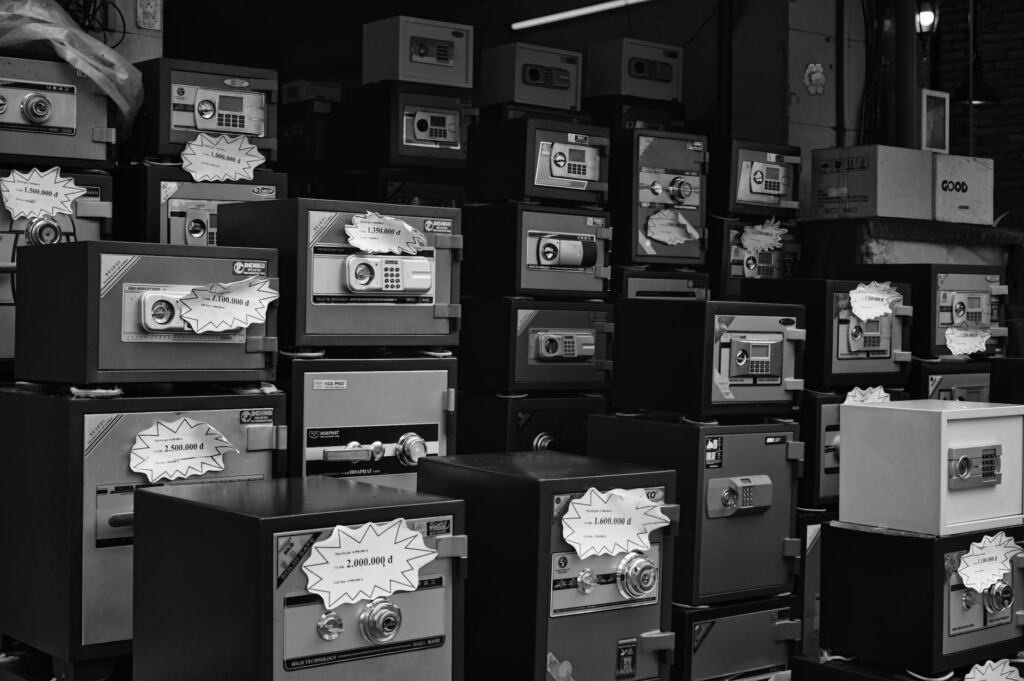
The trade-off is plain. A hardware wallet puts the owner in charge of physical safety and a backup routine. An orbital service would move some of that burden to an operator, but it would add a link, a ground station and a company that must keep running. Most holders are better off managing the first set of risks than depending on the second.
A practical test before trusting any orbital key service
Any company that markets satellite-secured private keys can be tested with a short checklist. A service that cannot answer these points is a marketing claim, not a custody product.
- Identify the operator. Find the named company that runs the satellite and the ground segment, and check whether its public documentation describes key storage at all, rather than connectivity or payments.
- Find where keys are created. Documentation should say whether keys are generated on the orbiting device or on the ground, and whether they ever leave the hardware.
- Ask about link loss. The provider should explain what happens to access when the radio link or ground station is unavailable.
- Check transaction display. The user should be able to see what is being signed on a screen they trust.
- Compare with the baseline. Set the service against a hardware wallet and a stored backup, and ask what orbit adds that justifies the extra dependency.
Measured against these questions, the documented Spacecoin material answers the first only: it names its operator and its satellite builder, and then describes connectivity. Until a company publishes answers to the rest, the safe reading is that a crypto wallet in space remains an idea and not an available service.
Frequently asked questions
| Question | Answer |
|---|---|
| Does Spacecoin store users’ private keys on its satellites? | The documented design is about connectivity and on-chain settlement on the Creditcoin blockchain, with escrow releasing tokens to the operator after the user acknowledges service. Key storage on the satellite is not part of that description. |
| Is Proof-of-Spacetime a way to secure a wallet in orbit? | No. The Tangem glossary defines it as a consensus mechanism combining data storage commitments and proof of elapsed time, so it is unrelated to satellites or wallets. |
| Does a low orbit make a satellite wallet more secure? | No evidence supports that. LEO satellites orbit much closer to Earth than geostationary ones, which the source associates with lower latency, and that concerns link delay rather than key protection. |
| What is the simplest alternative to storing keys in orbit? | A hardware wallet, with its recovery phrase backed up offline in a locked place, keeps keys under the owner’s physical control and avoids any radio link or operator. |