| Symptom | First action | Planning use |
|---|---|---|
| No Wi-Fi or mobile data, but a payment is due | Create and sign a standard Bitcoin transaction in a wallet such as Samourai while offline | Signing needs no connection, so do it first and treat delivery as a separate problem. |
| Signed transaction sits on the phone with no route out | Hand it to goTenna devices through TxTenna so nearby nodes relay it to an internet-connected node | Suits places where a radio mesh has at least one member that is online. |
| No mobile carrier coverage at all | Use the mesh radio signal, which does not depend on carrier cells or an internet connection | Choose radio over any carrier-based route when the cell network is gone. |
| Only plain text messages are available | Treat SMS broadcasting as an announced option, not a finished tool | Check what your wallet version actually ships before relying on it. |
The rows draw on the bitcoin.co.uk report on TxTenna and Altcoin Buzz’s roundup of offline on-chain transfers.
You can send bitcoin without internet by signing the transaction offline and relaying it over a mesh radio until an online node broadcasts it. The signing never needs a connection; delivery does.
Satellite is a separate topic. Our crypto satellite hub covers it, while this guide follows the paths where a signed transaction actually leaves your device.
What “offline” means for a Bitcoin transaction
A Bitcoin transaction has two stages: creating and signing it, then getting it to the network. Only the second stage needs connectivity, and that is the stage the methods below solve.
The Samourai Wallet app, according to the bitcoin.co.uk report, lets the user create a standard bitcoin transaction and sign it while offline, without Wi-Fi or mobile access. Nothing about the transaction itself is special. It is the same kind of transaction an online wallet would produce, which is why any node can accept it later.
So the honest answer to whether you can really send a bitcoin transaction without internet is yes, with a condition. Something in the chain must eventually be online. In the documented designs, other people’s devices carry the transaction until one of them reaches the internet, and that device submits it to the Bitcoin network.
Forming and checking the signed raw transaction
Build and sign
A signed raw transaction is the finished, serialized transaction plus the signature that authorizes it. The Venly documentation on signing raw transactions states that the resulting signature can then be used to submit the transaction to the blockchain. That is the object you carry across any offline path.
Venly’s request format shows the minimum a Bitcoin transaction needs: a type of BITCOIN_TRANSACTION, a destination in the to field, and optional value and feePerByte fields. It also has an optional flag deciding whether the transaction is submitted to the blockchain immediately. When another route will carry the transaction, keep submission off so you control when it is broadcast. Venly is an online service, so treat this as an illustration of the structure rather than an offline tool.
Check the size before choosing a link
Check the size before you pick a path. The open-source rawtx library parses a raw transaction from a hex string and reports its size in bytes and its virtual size in vbytes. Run a transaction through it, or an equivalent decoder, and note both figures. Small payloads suit narrow channels such as text messages or radio, so a transaction that is larger than you expected is a reason to reconsider the inputs you selected.
Avoid hand-built signing
Venly warns that its raw signing functionality should only be used with a deep understanding of how blockchain technology works, and recommends the regular transaction API otherwise. If you are new to this, let a wallet app build and sign the transaction rather than assembling it manually.
Radio relay with goTenna and TxTenna
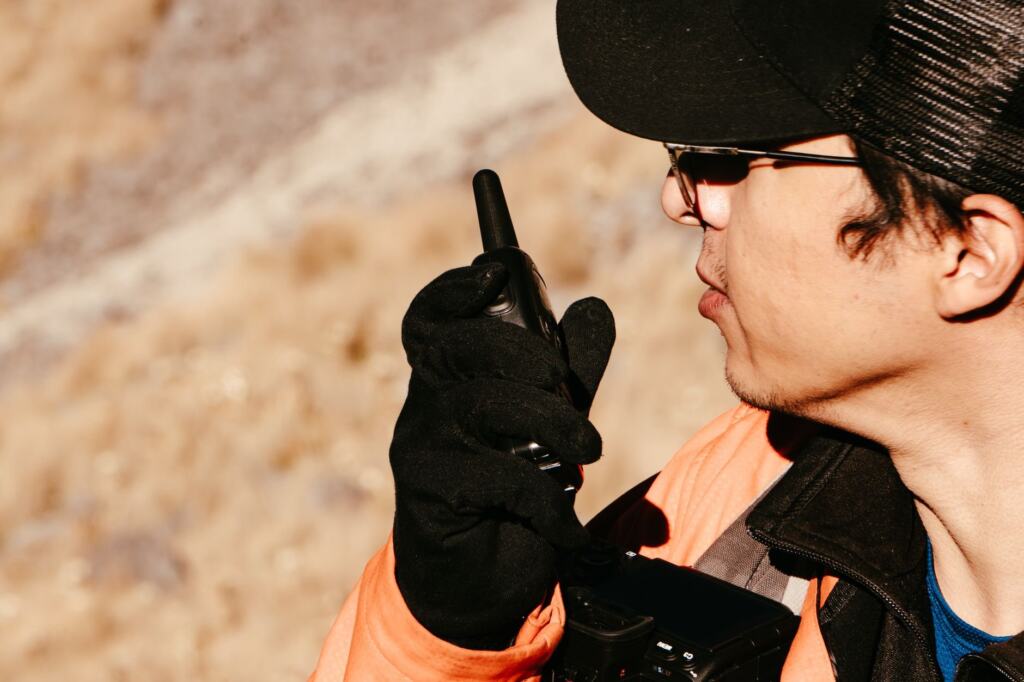
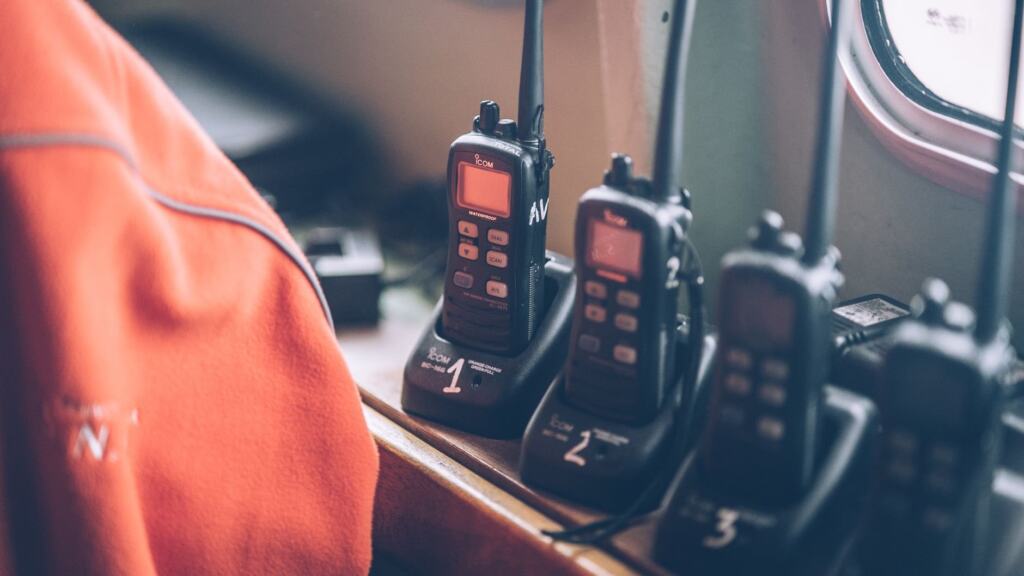
The best-documented send path is TxTenna, a mobile app built by Samourai Wallet with goTenna and billed in 2018 as the first mobile app for storing and sending Bitcoin offline. goTenna specialises in consumer-grade mesh networking devices that operate peer-to-peer, and the bitcoin.co.uk report says the signal does not depend on mobile phone providers’ cells or an internet connection.
Symptom: the signed transaction has no way out
The fix is to push it into the mesh. The documented flow runs in this order:
- Sign offline. Create the standard transaction in Samourai Wallet and sign it with no connection.
- Send over the mesh. Hand the signed transaction to a goTenna device through the app.
- Let nodes relay. Other goTenna devices in the area pass the transaction along.
- Reach an online node. An internet-connected goTenna node forwards it to the Bitcoin network.
The last step is the limiting factor. If no node in range is online, the transaction stays in the mesh and does not reach the chain. Plan around that before you depend on this route, for example by knowing whether someone in your group will regain a connection.
Symptom: the app will not install or run
At launch TxTenna was Android only, and no iOS plans had been announced. If your phone is an iPhone, this route was not available then, and you should confirm current platform support before buying hardware.
Hardware and software checklist
The documented radio route needs three things: a wallet that can sign offline, goTenna mesh devices, and the TxTenna app on a compatible phone. Beyond that, a signed transaction is just data, so your wallet should let you export it rather than force an immediate broadcast.
- Wallet: it must create and sign a standard transaction without a connection, as Samourai Wallet does.
- Radio device: goTenna’s consumer mesh hardware operates peer-to-peer, with no carrier involved.
- Phone: check platform support, since the app launched on Android only.
- A reachable online node: without one, nothing is broadcast.
The SMS route
SMS is the route people most often ask about, and it is the least settled. On July 4, 2018, Samourai announced through its account that upcoming updates would enable options such as offline broadcasting via SMS or the goTenna mesh network, as reported by Altcoin Buzz. That was a statement of plans.
Symptom: only text messages work
If you can send a text but cannot open a data connection, SMS is the obvious fallback. Confirm your wallet version actually includes SMS broadcasting, and do not assume a receiving service exists. The planning point is that SMS still relies on a carrier network and a party at the other end that submits the transaction. It does not remove the need for an online node, and it is not the same as the carrier-independent mesh signal.
Bluetooth mesh with Bitchat
A newer approach uses phones alone. Bobsguide’s July 9, 2025 report describes Bitchat as an app developed over a weekend that leverages a Bluetooth mesh network. A user can create and sign a transaction, which is then passed through the mesh until a peer with internet access broadcasts it.
That is the same store-and-forward logic as goTenna, but it needs no extra radio hardware. It suits dense settings where other users are nearby and one of them is online. In a sparse area, a short-range Bluetooth hop may not find anyone, and the radio route is the better choice.
Where satellite fits
Satellite does not replace the send paths above. For why the data is broadcast from orbit, read why broadcast bitcoin from space, and for the equipment budget see blockstream satellite cost.
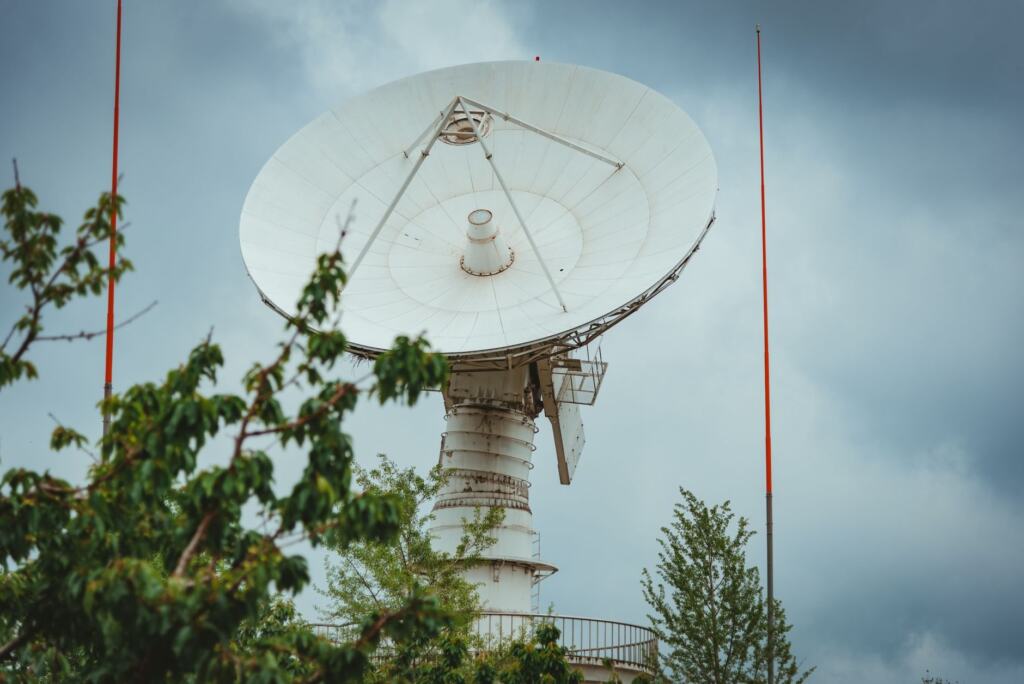
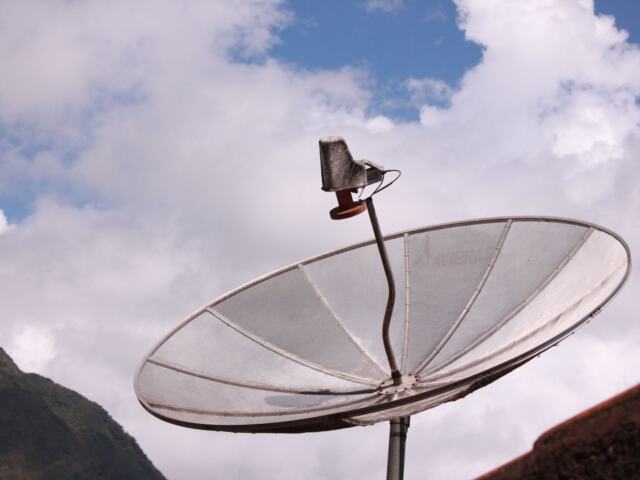
Keep the roles separate when you plan. A dish is something you point at the sky to take data in, whereas the mesh, SMS and Bluetooth methods are how a signed transaction goes out. A complete offline setup can combine both, but each part solves a different problem.
Security and privacy risks
The main risks come from the transaction passing through devices you do not control, and from handling raw transaction data yourself.
- Relay by strangers: in the goTenna design, other devices in the area relay your transaction until an online node forwards it. Treat the relay path as untrusted, and remember that a stalled relay delays your payment rather than cancelling it.
- Sybil attacks: Bobsguide notes that mesh networks face Sybil attacks, where an attacker creates numerous fake identities to disrupt the network. A larger or more crowded mesh does not automatically mean a safer one.
- Message encryption: Bitchat messages are secured with Curve25519 and AES-GCM cryptographic protocols, according to the same report. That protects messages in transit, but it does not make the mesh immune to disruption.
- Operator error: Venly’s guidance that raw signing requires deep blockchain knowledge applies to anyone building transactions by hand. Use a wallet that does this for you.
Before you broadcast, decode the transaction and confirm the destination, the amount and the fee. A signed transaction is hard to correct once it reaches an online node.
Frequently asked questions
| Question | Answer |
|---|---|
| Can I send a bitcoin transaction with no internet at all? | You can create and sign it offline. To reach the network, the documented designs relay it through nearby devices until one with internet access broadcasts it. |
| Does goTenna bitcoin work on an iPhone? | TxTenna launched for Android only, with no iOS plans announced at the time. Check current support before buying devices. |
| Are bitcoin SMS transactions available today? | Samourai announced offline broadcasting via SMS as a planned option in July 2018. Confirm that your wallet version includes it before you rely on it. |
| Is bitcoin radio transmission private? | Other devices relay the signed transaction, so assume it passes through hands you do not control. Bitchat encrypts messages with Curve25519 and AES-GCM, and Sybil attacks remain a concern for meshes. |
| Do I need to build the raw transaction myself? | No. A wallet such as Samourai creates and signs a standard transaction for you, and Venly advises against raw signing without deep blockchain knowledge. |